

This is why so many clients in West Hollywood struggle with recurring pain even when they exercise regularly. They focus on their knees, hips, or back without ever looking at what is happening at their feet.
Your feet are the foundation of your movement system. Every step you take sends force up through your ankles, knees, hips, pelvis, and spine. When the feet do not function well, everything above them has to adapt. Over time, those adaptations become pain.
Understanding how foot and ankle mechanics affect the rest of your body is one of the most important steps toward long term pain relief.
Your foot arch is not meant to be rigid or collapsed. It is designed to adapt to the ground, absorb force, and help transfer energy efficiently.
When arches collapse or lose control, several things often happen:
This chain reaction explains why foot arch pain in Los Angeles is often linked to knee pain, hip discomfort, or lower back tension.
Collapsed arches do not just affect the foot. They change how your entire body moves.
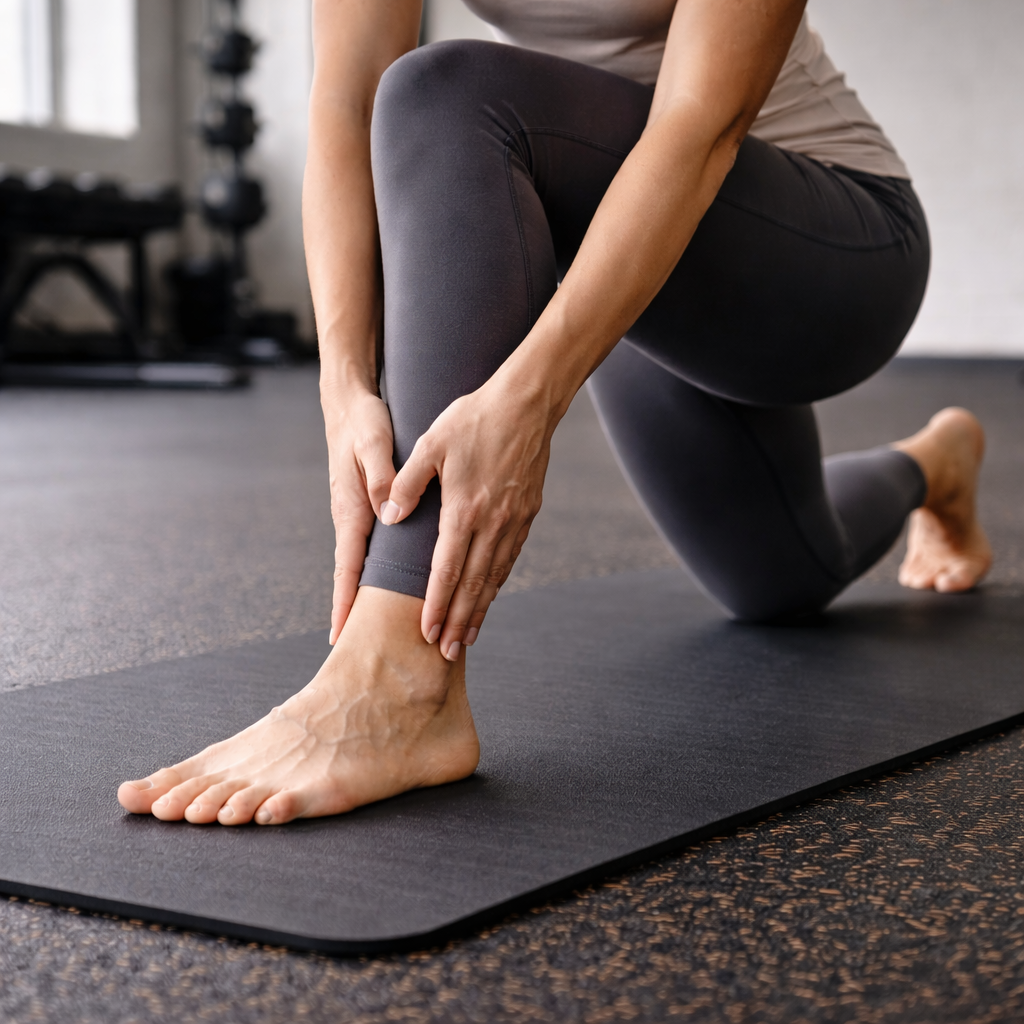
Ankle mobility plays a critical role in walking, squatting, and running. If the ankle cannot move through its full range, the body finds another way to create motion.
Common compensations include:
Limited ankle mobility often leads to ankle mobility pain that shows up elsewhere in the body. Improving ankle movement allows force to be absorbed where it should be rather than passed upward.

Gait mechanics describe how you walk. Walking is a low intensity activity but it happens thousands of times each day. Small inefficiencies here add up quickly.
During a gait assessment, I look at:
Poor gait mechanics often explain recurring pain patterns. This is why gait issues in West Hollywood are such a common finding during movement assessments.
When the feet do not provide stable support, the hips and spine compensate to maintain balance. The hips may become overactive to control rotation. The spine may stiffen to provide stability.
Over time, this leads to:
The body is not broken. It is adapting to a weak foundation.
This is why looking at the feet and ankles is a key part of a full movement assessment rather than focusing only on the painful area.
During a movement screening, I assess:
This information helps identify whether pain is coming from poor mobility, lack of stability, or faulty movement patterns.
You can learn more about this detailed approach in
Beyond the Standard FMS: How Ramin’s Assessments Go Deeper.
Many people chase symptoms. They stretch the hips, strengthen the back, or rest the knee. These strategies can help temporarily but the pain often returns because the real issue was never addressed.
When foot and ankle mechanics improve, the entire system moves more efficiently. Pain often reduces without directly treating the painful area.
This root cause approach is explained further in the
Functional Movement Screening Hub.
If you are dealing with recurring knee, hip, or back pain, your feet and ankles may be the missing piece. A personalised movement assessment can reveal what your body needs and how to restore balance.
Fill the form below to book a 1 on 1 session.
You can also find my West Hollywood studio location and reviews on Google Maps here:
https://share.google/vG8YuWFFppjKJUTWY
Can foot problems really cause back pain?
Yes. Poor foot mechanics change how force travels through the body and often overload the spine.
Do I need special shoes or orthotics?
Not always. Many issues improve with better mobility, strength, and control.
How long does it take to see improvement?
Many clients notice changes within a few sessions once the correct areas are addressed.
Is gait assessment part of the screening?
Yes. Walking patterns provide valuable insight into movement efficiency.
Where are sessions held?
Sessions take place at my private studio in West Hollywood Los Angeles.